
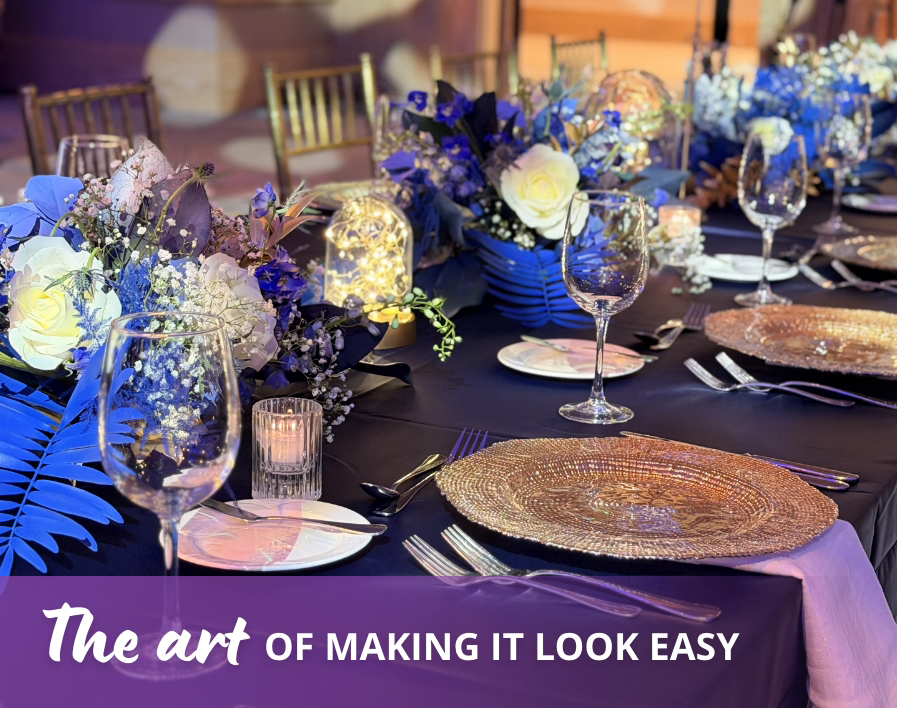
The Art of Making It Look Easy
There’s a funny thing about a really well-produced event: If we do our jobs right, you probably won’t notice half of what we did.
You’ll see the dramatic entrance, hear the music hit at exactly the right moment, and watch hundreds of guests move seamlessly through the experience. What you won’t see are the diagrams, production schedules, vendor calls, loading dock coordination, weather conversations, and countless decisions that led up to those moments.
And that’s exactly the point.
When you’re planning an annual sales conference, gala dinner, awards ceremony, training or other large corporate event, you already have enough to do. You shouldn’t also have to coordinate with the event designers, production crew, venue, entertainment, transportation, and every vendor in between.
Our job is to connect those pieces for you. We work alongside your internal team and venue to manage the creative, technical and logistical details from the first conversation through the final load-out.
In this issue, we’re sharing some of what happens behind the scenes, including the details you shouldn’t have to manage yourself, a sneak peek at an Italian-inspired event we’re creating for December and what really happens when Florida weather refuses to cooperate.
The event can be complex. Your experience planning it shouldn’t be.
6 Event Details You Shouldn’t Have to Manage Yourself
Large corporate events have a lot of moving parts. The more vendors involved, the easier it becomes for your internal team to spend more time coordinating everyone else than focusing on your guests, employees, and event goals.
Here are six areas where having one experienced event partner can make the entire process easier.

1 – Making Sure Everyone Is Working From the Same Plan. Your venue, event designers, production crew, entertainment, and internal stakeholders all need to understand what’s happening, where it’s happening, and when. Detailed diagrams, production schedules, and clear communication help everyone work from the same vision before anyone arrives on-site. That means fewer surprises during setup and fewer decisions landing back on your team.
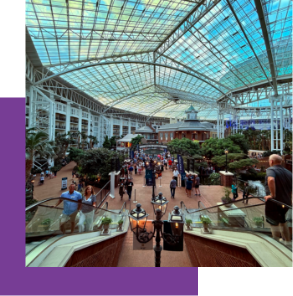
2 – Coordinating With the Venue Before Event Week. Your venue coordinator wants your event to succeed, too. But hotels and other venues often have multiple programs happening at once. We help bridge the gap by working with the venue well before load-in to coordinate details such as:
• Loading dock timing
• Room access
• Installation schedules
• Storage
• Power requirements
• Rigging
• Vendor arrivals
• Permits when needed
The more that gets resolved ahead of time, the less your team has to troubleshoot on-site.
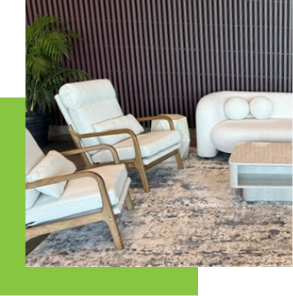
3 – Knowing Where to Spend and Where to Save. Creating a memorable experience doesn’t mean every square foot needs custom décor. Sometimes a venue already has furniture, architectural features, lighting or décor that can work beautifully with your vision. Identifying those opportunities early can free up budget for the details guests will notice most. The goal isn’t simply to spend less. It’s to spend strategically.
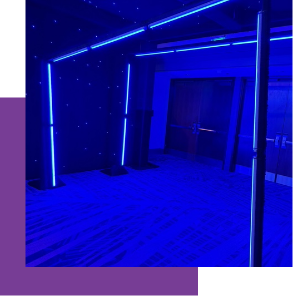
4 – Making Creative and Technical Decisions Together. A great idea still has to work in the real world. Lighting, audio, video, LED, staging, rigging, scenic elements and special effects all influence what is creatively possible. When creative design and technical production are planned together, you’re less likely to fall in love with an idea only to discover later that the venue or production setup can’t support it.
5 – Think About the Flow of Food & Drinks. For a multi-day conference or sales meeting, your event experience doesn’t begin and end with the general session. It may include:
• Welcome receptions
• Awards dinners
• Breakout sessions
• Off-site activities
• Brand activations
• Entertainment
• Transportation
• Show content and graphics
Thinking about the entire experience together creates greater consistency and gives your team fewer individual pieces to manage.
5 – Having Someone Own the “What If?”
What if the weather changes?
What if a performer is delayed?
What if load-in takes longer than expected?
What if an outdoor reception suddenly has to move indoors?
A contingency plan is part of our event planning process, not something we create after there’s a problem.